Web
Dunia Juice Indonesia
This vape online store SEO project set out to seo-only engagement for dunia juice indonesia's custom laravel storefront out of surabaya — blog content, category-level keyword mapping and technical seo layered onto a platform that was already technically solid.
Web · SEO · Indonesia
Vape Online Store SEO for a Brand That Already Had the Tech
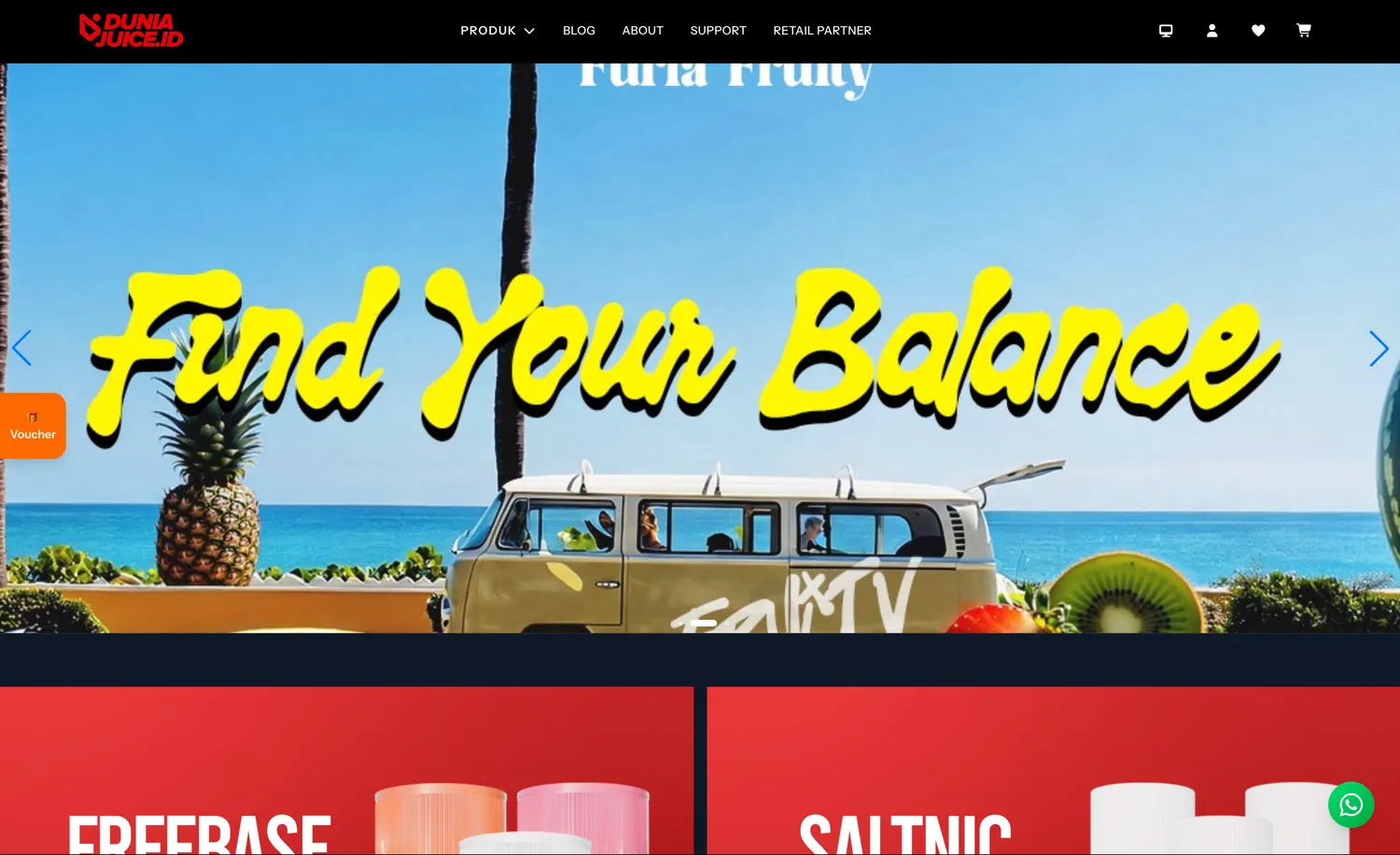
Dunia Juice Indonesia came to me in a different position than most SEO clients. The brand already had a fully custom e-commerce platform out of Surabaya, complete with its own mobile app, a loyalty rewards system, a retail partner network, and a blog. What they didn't have was a search strategy that matched the ambition of the platform itself. This project became a case of pure vape online store SEO work, layered on top of a build that was already technically solid.
That distinction matters. A lot of SEO work starts with fixing a broken or outdated site. Here, the foundation was strong: fast product pages, a working rewards app on both the App Store and Google Play, and a genuine retail partner program connecting the online brand to physical vape shops. My job wasn't to rebuild anything. It was to make sure that foundation actually surfaced in search results instead of relying entirely on paid ads and existing brand recognition.
What Dunia Juice Focuses On
Dunia Juice positions itself as a premium e-liquid brand, splitting its catalog into freebase liquids, saltnic formulations, and branded merchandise. The FURLA product line in particular carries a large share of the catalog, with flavor families built around dessert and fruit profiles that rotate through new arrivals regularly.
Beyond the product catalog, the brand runs a genuine content operation. Their blog covers regulatory commentary on vaping in Indonesia, practical questions like why e-liquid changes color over time, and educational content explaining the difference between VG and PG, the two base ingredients in any vape liquid. That blog is where most of the SEO opportunity lived, since informational searches in this category vastly outnumber people typing a specific product name.
The Rewards App and Retail Partner Angle
A loyalty app is a strong retention tool but a weak SEO asset on its own, since app store listings don't typically rank for competitive category terms the way web content does. Part of the SEO strategy involved making sure the web presence around the app — the “download the app” pages, the retail partner directory, and the rewards explanation — carried enough on-page structure to rank independently rather than depending on the app stores to do that work.
The retail partner network also created a natural local SEO opportunity. Each partner location represents a potential local search intent, someone looking for a vape store near them who happens to search a term that connects back to Dunia Juice's retail footprint. Structuring that page with clear, crawlable location information was a small but meaningful piece of the broader strategy.
SEO Strategy: Blog Content as the Entry Point
With the storefront already built, the blog became the primary lever. Each article was mapped to a specific informational search intent rather than a product push: questions people actually type into Google before they've decided what to buy, like why their liquid looks darker than it used to, or what VG and PG even mean if they're new to vaping. Ranking for these terms builds trust before a purchase decision, which matters in a category where new users are often uncertain about what they're buying.
On-page structure followed the same discipline used across all my SEO work: one focus keyword per article, that keyword present in the meta title, meta description, URL slug, and within the first fifth of the content rather than buried further down. Headings stepped down properly from H2 to H3 without skipping levels, and each post carried internal links back to relevant product categories, so someone reading about VG and PG could move straight into browsing saltnic liquids without needing to search again.
Technical SEO on a Custom Platform
Working SEO into a custom-built platform instead of WordPress changes the workflow but not the fundamentals. Canonical URLs, Open Graph tags, and clean meta structures still needed to be verified page by page rather than handled through a plugin, and the product image pipeline needed the same discipline around file naming and compression that I apply on every project, regardless of what's running underneath the site.
Robots directives were also part of the audit. A storefront this size, with login, wishlist, and cart pages living on public paths, needs careful control over what search engines are allowed to index. Getting that wrong either floods search results with irrelevant account pages or accidentally blocks a page that should be ranking. Both mistakes are common on custom platforms that were built for functionality first and SEO second.
Keyword Mapping Across a Growing Catalog
One challenge specific to an e-liquid storefront this size is catalog churn. New flavor variants launch constantly, older ones get discontinued, and bundle promotions rotate on a schedule that has nothing to do with search rankings. Rather than optimizing individual product pages one by one, which becomes unsustainable at this scale, the strategy focused on category-level pages carrying the bulk of the SEO weight: freebase, saltnic, and merchandise as the three pillars, each targeting a slightly different search intent and audience.
This category-first approach means new products slot into an already-optimized structure instead of needing their own SEO treatment every time. It's a more sustainable model for a brand that adds and removes SKUs faster than any single person could manually optimize, and it keeps the site's overall authority concentrated rather than diluted across hundreds of thin, individual product pages.
Working Around an Existing Development Team
Because Dunia Juice already had developers maintaining the Laravel-based platform, part of my role involved translating SEO requirements into something a development team unfamiliar with search optimization could actually implement without breaking existing functionality. That meant writing clear specifications instead of just flagging problems: exact meta tag formats, specific schema markup requests for the blog's Article type, and canonical URL rules that wouldn't conflict with the platform's existing routing logic.
This kind of collaboration is different from projects where I control the full build. It requires being precise about what needs to change and why, without assuming the team on the other end has SEO background — a skill that ends up mattering as much as the technical SEO knowledge itself, especially on a platform this custom, where a careless change request could break checkout flow just as easily as it could fix a ranking issue.
See More
See more SEO-only engagements in the portfolio, or read about the full service on the WordPress & SEO services page. If your business already has development resources in place and just needs someone focused on search performance, send a brief.